What Is Streetwear Fashion? A Complete Guide to Modern Streetwear Outfits
Nobody sat down in a boardroom and invented streetwear. It didn’t come from a runway. It came from skate parks in California, hip-hop culture in New York, and youth scenes in Tokyo that had nothing to do with traditional fashion at all. That origin matters, because it’s what makes streetwear fashion different from every other style movement — it came from the street and worked its way up, not the other way around.
Today it’s everywhere. Luxury brands copy it. Department stores sell it. Every major clothing brand has a “streetwear-inspired” line. But the core of what streetwear actually is hasn’t changed much since the 90s. Comfortable, bold, expressive, built around real life rather than occasion dressing. If you’re wearing it to exist in the world rather than to perform for it, you’re doing it right.
This guide breaks down what streetwear clothing actually means, where it came from, and how to build streetwear outfits that work for men and women in 2024 and beyond.
Where Streetwear Actually Came From
The short version: Shawn Stussy started selling printed t-shirts off his surfboard shaping business in the early 80s. Simultaneously, hip-hop culture in New York was developing its own visual language — oversized fits, bold logos, sneakers as status symbols. Japanese youth culture absorbed both of these and pushed them further. By the mid-90s, brands like Supreme, BAPE, and Futura had turned what was essentially underground youth culture into a recognizable global aesthetic.
The longer version is that urban streetwear fashion was always about identity. You wore what your community wore. Hoodies, cargo pants, graphic tees, and sneakers weren’t fashion choices in the traditional sense — they were signals. Who you were, what you listened to, where you spent your time. The clothing was the communication.
That DNA is still present in modern streetwear, which is why it connects in a way that purely trend-driven fashion often doesn’t. People aren’t wearing streetwear style because a magazine told them to. They’re wearing it because it fits how they actually live.
What Streetwear Actually Is Today
Streetwear clothing in 2024 sits at the intersection of comfort, culture, and self-expression. The categories that define it are pretty consistent regardless of which corner of the style world you’re looking at.
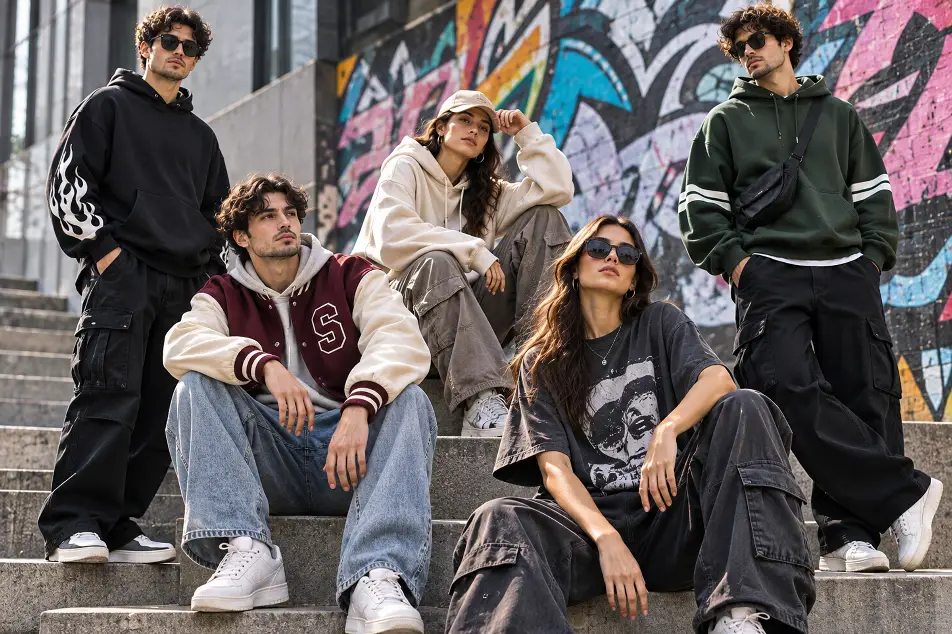
Hoodies and sweatshirts are the foundation. Always have been. A good streetwear hoodie — oversized fit, solid heavyweight cotton or a bold graphic print — is the single most versatile piece in the streetwear wardrobe. It can anchor an entire outfit or function as a layer under something heavier. No streetwear wardrobe is complete without at least two or three strong hoodies. Browse hoodies and sweatshirts at New USA Jackets if you’re building from scratch.
Graphic apparel is the category that gives streetwear its visual character. Bold prints, logo placement, typography, cultural references worn on the chest or back. Graphic apparel is how streetwear communicates — it’s the most direct expression of the wearer’s references and affiliations. A plain white tee is a canvas. A graphic tee is a statement.
Relaxed silhouettes are non-negotiable. Streetwear doesn’t do fitted. Oversized tops, wide-leg pants, boxy cuts — the whole aesthetic is built around relaxed silhouettes that prioritize ease and proportion over structure. When something fits tight in a streetwear context, it’s usually intentional contrast against something oversized, not a default.
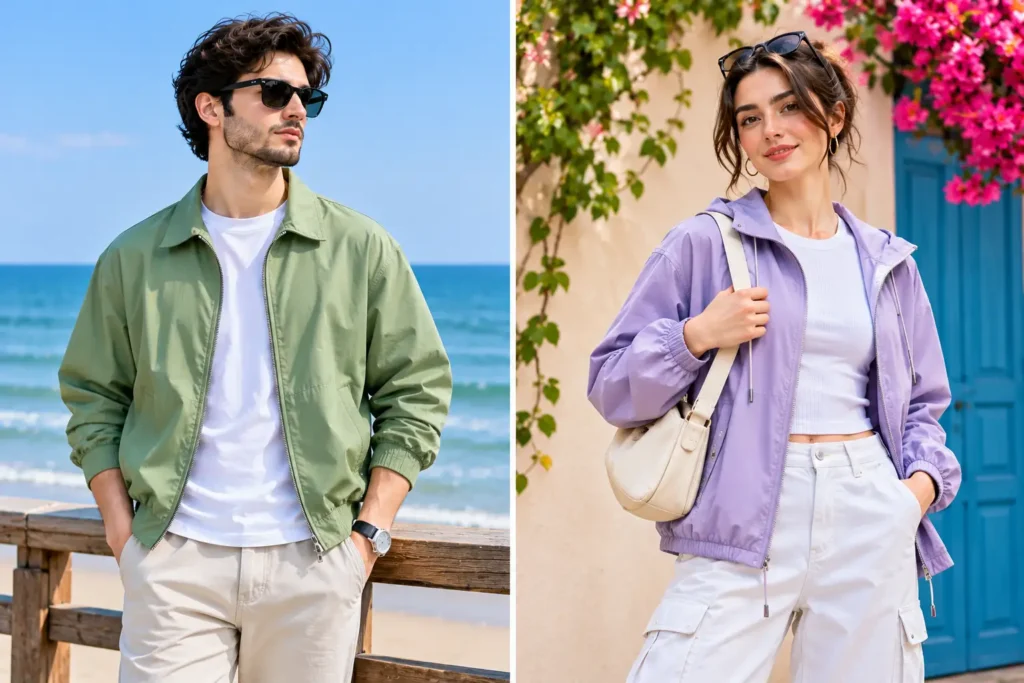
Outerwear plays a significant role. Bombers, varsity jackets, and puffers function as the top layer of most streetwear looks and often carry the most visual weight in the outfit. A clean bomber jacket over a hoodie and cargo pants is one of the most reliable casual streetwear outfits in existence.
Sneakers are the finishing element. You probably already know this. Streetwear and sneaker culture developed together and remain inseparable. The sneaker often sets the tone for the rest of the outfit.
Streetwear Style for Men: How to Build It
Streetwear style for men is less about following specific rules and more about understanding proportion and layering. The combinations that consistently work:
A heavyweight oversized hoodie with straight-fit or wide-leg cargo pants and mid-top sneakers. This is the baseline streetwear outfit that works in almost any context. Dark neutral hoodie, olive or black cargos, chunky or classic sneakers. It’s reliable because the proportions are balanced — volume on top, relaxed but not shapeless on the bottom.
A varsity jacket over a graphic tee with straight jeans and clean sneakers. The varsity jacket is one of the most consistent pieces in urban streetwear fashion because it carries both the sport and style references that define the aesthetic. It layers over virtually anything and reads intentional immediately.
A leather jacket or bomber over an oversized hoodie with wide-leg pants and boots. This is the cold-weather version of the above and handles fall and winter without abandoning street style inspiration for purely functional outerwear. The layering is doing the work — two pieces with visual weight that still read as one cohesive look.
Oversized streetwear works best for men when there’s a deliberate anchor. An oversized hoodie with oversized pants needs a defined shoe — something with visual weight that grounds the silhouette. Without that, the whole outfit reads shapeless rather than intentional.
Streetwear Style for Women: How It Works
Streetwear style for women has its own distinct direction and doesn’t just mean wearing the men’s version in a smaller size. The aesthetic overlaps but the proportions and styling choices diverge significantly.
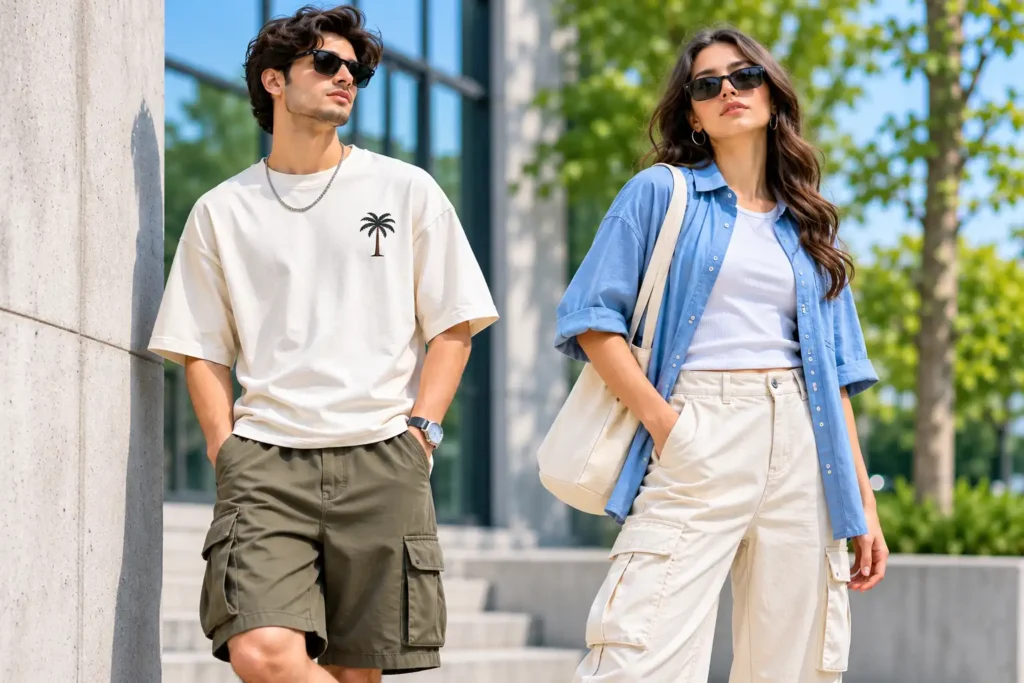
Oversized hoodies and graphic tees worn with wide-leg trousers or straight jeans and chunky sneakers or boots are the female streetwear foundation. The proportions work the same way — volume on top, straight on the bottom — but the silhouette tends to be more intentionally styled than the men’s equivalent. A women’s hoodie in a muted neutral — cream, stone, warm grey — with wide-leg black trousers and white sneakers is a complete modern casual wear look that sits clearly in the streetwear space without being loud about it.
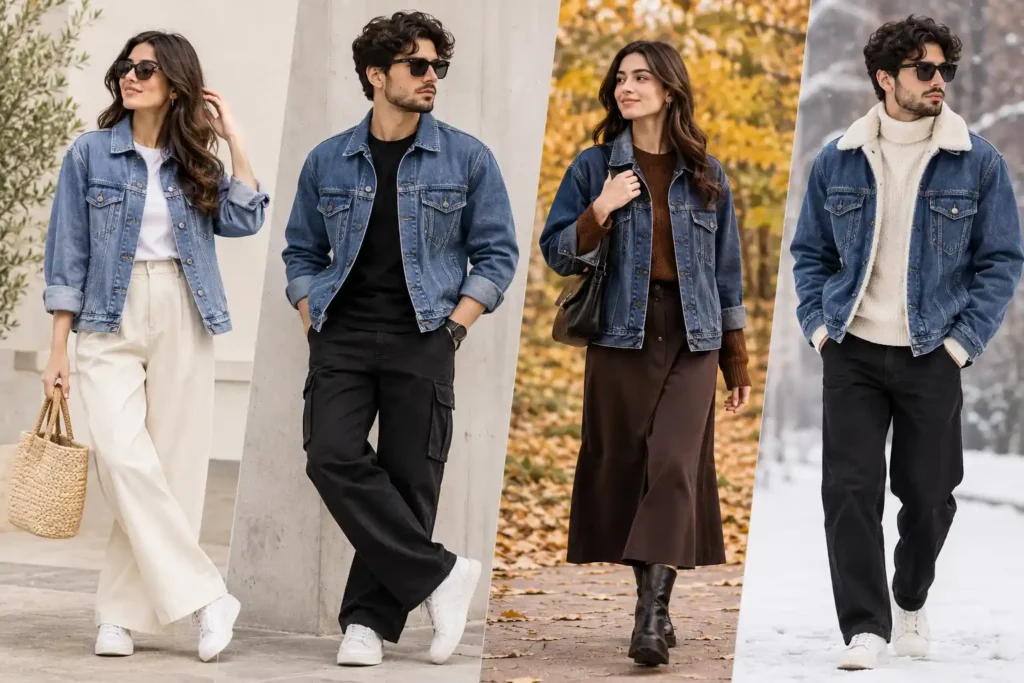
Layering is particularly strong in women’s streetwear. A cropped jacket over an oversized tee, or a puffer vest over a long hoodie with straight jeans — these combinations play with proportion in a way that’s distinctly streetwear while remaining genuinely wearable in everyday contexts across the USA, Canada, and Mexico.
Women’s streetwear outfits also lean more heavily into accessories as part of the visual language than men’s typically do. Bucket hats, oversized bags, and layered jewelry are integrated into the look rather than being add-ons. The accessories aren’t finishing touches — they’re part of the fit.
Urban Streetwear Fashion: The Current Landscape
Urban streetwear fashion in 2024 is a few things simultaneously, which makes it worth mapping out.
The oversized everything wave hasn’t ended. Wide-leg silhouettes, boxy hoodies, oversized outerwear — relaxed silhouettes continue to dominate because they’re genuinely comfortable and they photograph well. This isn’t going anywhere soon.
Neutral tones have taken over from the heavy logo era. The loudest streetwear moment — the Supreme-everything period — has given way to a quieter palette. Olive, sand, black, cream, and warm brown are the current dominant colors in urban fashion trends. The graphic apparel is still there, but it’s more selective and often more subtle than the peak logomania years.
Layering across categories is increasingly normal. A hoodie under a tailored coat, a bomber over a formal shirt, cargo pants with dress shoes — the separation between modern casual wear and other dress categories has genuinely dissolved in a way it hadn’t before. Streetwear absorbed formal elements and formal dressing absorbed streetwear, and what’s left is a more fluid approach to getting dressed.
The campus streetwear category specifically — varsity aesthetics, collegiate references, athletic silhouettes worn in non-athletic contexts — remains one of the strongest street style inspiration directions in North American fashion right now.
Building a Streetwear Wardrobe from Scratch
If you’re starting from zero, the most efficient approach is building around versatile anchor pieces that combine easily rather than buying individual “fits.”
Start with two or three heavyweight hoodies in solid neutrals. These combine with almost everything else in the wardrobe and carry outfit weight on their own. Explore the full streetwear collection at New USA Jackets for current options.
Add outerwear that can function as a visible layer — a bomber, a varsity jacket, or a puffer jacket depending on your climate. The outerwear is what makes casual streetwear outfits look complete rather than half-finished.
Build the bottom half around two or three pairs of pants in different silhouettes — wide-leg cargo, straight-fit denim, relaxed jogger — so you can combine them with the same tops in different ways.
Sneakers are the fourth piece. Two pairs minimum: a chunky or statement sneaker for bold combinations, a clean minimal sneaker for more restrained looks.
That’s a functional streetwear wardrobe. You can expand from there, but you don’t need to start big. Five to eight pieces that combine well across different proportions beats twenty pieces that only work individually.
Build Your Streetwear Look at New USA Jackets
New USA Jackets carries streetwear clothing for men and women built around the pieces that actually define the aesthetic — hoodies, outerwear, and campus-inspired styles that ship to the USA, Canada, and Mexico.
- Tags: Fashion Show, Press Releases